1. Welcome to the Recumbent Riders International forums.
    You are currently viewing the discussion boards as a guest which gives you limited access to view most discussions and other features. By joining our free community you will have access to post and reply to topics, communicate privately with other members, download/upload content and access other special features. Registration is fast, simple and absolutely free so please,
    Join the community today!
    If you have any problems with the registration process or your account login, please contact us.

Buying your FIRST recumbent

Discussion in 'Gear and Equipment' started by Rocketmantn, Aug 15, 2011.  |  Print Topic

Thread Status:
Not open for further replies.
  1. Rocketmantn

    Rocketmantn Rider

    Region:
    East
    State/Country:
    TN
    City:
    Knoxville
    Ride:
    Strada, Corsa
    Name:
    Jon
    Buying your FIRST Recumbent.

    2448.jpg

    2449.jpg

    Welcome to the daunting world of recumbents. If you are reading this article, you have probably gotten tired of the aches and pains from your old trusted diamond framed bike, or are just looking for something new.

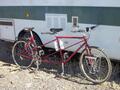
    This transformation will take you from this...

    2452.jpg

    to this...

    2451.jpg

    Unlike DF (Diamond Framed) bikes like your Treks, Specialized, Schwinn, etc. which all basically look the same, recumbents are only limited by the imagination of the designer and physics. Because of that, there is a W I D E selection of recumbents to choose from. And this can be confusing for a recumbent newbie. So how do I know which one is “right” for me?

    Well, let me start off by saying I can’t tell you which recumbent is “right” for you. Only YOU can determine that. A recumbent that one rider “loves” to another recumbent rider is “awful”. It isn’t that the recumbent is bad, it is like music, we all have different tastes. Therefore, the only “right” recumbent for you is the one that feels “right” BY YOU!!!! But how do you find it? That is what this article is going to attempted to do. And that is to try to steer you in the “right” direction.

    The first thing you want to ask yourself is; what do you want to accomplish by owning a recumbent? Do you want to avoid using your car? (Need a recumbent good in traffic and capable of hauling stuff.)

    2453.jpg

    Do you want to get exercise riding on local roads? (Can be a heavy recumbent with good visibility to cars.)

    2458.jpg

    Do you want to go on self-contained rides? (Need a strong frame and wheel sets with pannier mounts available.)

    2455.jpg

    Do you want to do Metric Centuries (62 mile rides) or Centuries (100 mile rides)? (Fast, light recumbent.)

    2456.jpg

    Do you suffer from “Greyhound Brain” as one of our members says and want to beat the pants of ALL DF riders? (High or Low racer recumbent.)

    2457.jpg

    Do you see what I mean? Each of these events has a recumbent which is suited for the specialized need. So you can save yourself a lot time and money by narrowing down what you want out of the recumbent FIRST!!! That will eliminate a lot of bents (our slang for recumbents) right from the start and help you narrow your search to your “perfect” recumbent.

    But to get you headed in the right direction, I want to group the most common types of recumbents on the market and give you some of the top manufacturers (please forgive any omission of manufactures or models. I am just giving a sampling of what is in the market.) If you stick with these, you are more likely to be happy in the long run.

    The other thing you need to think about is getting a good reliable “beginner” recumbent FIRST to see if you like it before dishing out the bigger bucks for a highly customized and expensive recumbent you end up NOT liking!!!! And if you don’t like it, you won’t ride it!!! So let’s start by talking about good “beginning” bents. These can be found new or used. They are comfortable and easy to learn on. Once you get your “recumbent” legs and balancing issues behind you, it will much easier to move to higher performance bents if that interests you. (Warning!!! Recumbent riding IS ADDICTIVE!!!)

    By far the easiest recumbent to learn on is a recumbent trike. Trikes come in two major configurations, delta and Tadpole. A Delta trike has one wheel in front and two in back. They look like this.

    2437.jpg

    Now don’t think all delta trikes look like “Granny” bikes. There are some very fast and sleek delta trikes on the market.

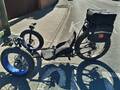
    However, right now the Tadpole trike is more popular. Here is a common tadpole recumbent trike set up.

    2443.jpg

    This has two wheels in front and one in the back. A Tadpole trike was MY first recumbent. You don’t have any balancing issues. They are fun to ride and you can haul stuff easily. (I went on a 250 mile ride carrying my stuff in panniers with my trike and with worked out fine.)

    If you want a trike made in America there are two – TerraTrike and Catrike. Both are popular brands, have several styles and are well made. Outside the US is SUN, Greenspeed, HP Velotechnic and ICE. There may be more but this is a good start.

    The disadvantages of a trike are they are heavy due to their configuration and more challenging to transport. (You need a big car, truck or bike rack to haul it around with. When I had my trike I went to the car dealer to look at a new SUV. When I found one I liked, I laid down the back seat, put a tarp down and put my trike inside. The salesperson thought I was strange, but took the sale when my trike fit. So don’t overlook this “Challenge”.) Also visibility is challenging. Being so low to the ground, cars cannot see a trike rider as well. This was solved by a bicycle pole with a bright red flag on it. Last disadvantage is getting in and out of the trike. If you have trouble getting in and out of chairs, you will have trouble with a trike. You sit very low to the ground. If these disadvantages don’t outweigh the advantages for you, go test drive one and see for yourself.

    If a trike is not up your alley, then a two wheeled recumbent may be the ticket. Here there are a much wider variety of recumbents. It can be mind boggling!!! There are Long Wheeled Based (LWB), Compact Long Wheel Based (CLWB), and Short Wheel Based (SWB) recumbents. There are high Bottom Bracket (BB) and low BB recumbents. There are Over Seat Steering (OSS) and Under Seat Steering (USS). AND you can combine these in thousands of combinations. Is your head spinning yet??? So now do you see why buying a recumbent can be bewildering?

    If you are reading this article, I am going to assume you are a beginner. If you already own a recumbent, then you already know most of this stuff. For a beginner the longer the bent, the lower the BB and the more upright you sit, the easier it is going to be for you to learn to ride. (Once you have that down, you can go to anything else.) So a LWB recumbent is easier to learn than a SWB. A recumbent with a lower BB (your feet are closer to the ground) is easier to ride than a higher BB (your feet are high in front of you). And a recumbent you sit more upright is easier than having you parallel to the road. Make sense?? Now these configurations won’t be the lightest, or fastest and are a challenge to transport but you can still have FUN!!!

    First a warning. Learning to ride a recumbent can be like learning to ride a bicycle all over again. Now you already know how to ride and balance a DF bike so jumping from one DF bike to another is easy. Recumbents on the other hand handle and balance differently. Your center of gravity is lower and towards the back wheel instead of the front wheel. You feel like you are falling backwards (which on a DF bike is NOT a good sign!!), but you have to get used to that. It really is a comfortable position. Think about when you are in your Lazy Boy recliner at home with the foot rest up and the seat back watching TV. A recumbent bike puts you in a similar position. However, it means at first you will wobble. You will also use different leg muscles. So you won't be as fast on a recumbent at first until you build up your new leg muscles. But in return you will be comfortable and having FUN!!!!

    Be fully prepared to look like a "drunk" riding a recumbent for the first 50 miles until you get the basics down. Then it takes about another 300 miles before you are truly comfortable on one. I just wanted to give you fair warning up front. If you get one, keep riding it. At first it will scare you to death but you will get better very quickly if you keep riding it.

    So if you agree my general analysis above, the easiest recumbent to learn on would be a LWB, lower BB seating upright bike. And they make just that.

    2444.jpg

    In fact, the Patriarch of the American recumbent bike industry was Gardner Martin and he designed and built the Tour Easy by Easy Racer. (They still make it today.) This bent is the “gold standard” of LWB recumbents. They are easy to ride. The rider is in a comfortable, “natural” position and they are great for touring. But there are other manufacturers out there as well. Make sure you look at RANS Stratus, Bachetta Bella, Edge Koosah or the Sun EZ series. The LWB recumbents have a more upright position, the BB (Bottom Bracket) is close to the ground and they are built for cruising. They are easy to learn to ride and give a smooth ride due to their long frames. Disadvantages are they are long which makes transporting them challenging in smaller cars. If you own a truck, no problem. They are also heavier because of the long frame.

    If transporting a LWB is won’t work for you, then try a CLWB or a SWB with a medium high BB and an upright seating. For example, here is a Rans V Rex.

    2445.jpg

    My Rans V Rex falls into this category as does a Sun EX Sport, Edge Durango or a Bachetta Giro.

    However, if the “need for speed” is your only motivation to switch to a recumbent (and all land bicycle speed records are held by recumbents) then a high racer...

    2446.jpg

    or a low racer maybe your ticket...

    2447.jpg

    But neither is a beginning recumbent bicycle so I won’t cover them here.

    Finally once you have narrowed the field, find a dealer who carries them. DO NOT UNDERESTIMATE THE VALUE OF A RECUMBENT DEALER. Many DF riders and bike shops know nothing about recumbents. Even though recumbents use many of the standard bicycle components, getting them all to work properly takes a specialized skill. Many DF shops won’t even work on recumbents. So buying a recumbent from a local dealer can save you HOURS of frustration because your bent needs a tune up and you don’t do it well!!!

    Finally test drive several bents before buying one. If you follow my recommendations and buy from a recumbent dealer, they should have a wide selection of bents for you to try at the store. The more time you are on a bent, the better your buying decision will be. The closer the comparison rides are together, the better your buying decision will be. (Thus why I recommend going to a recumbent dealer who carries several of the recumbents you are interested in.)

    The most important part of this whole process is having FUN!!

    Well, I am sure this is more than you wanted to know but I hope this helps your initial search!!!!

    Good Luck!!!
     
    jaykalla, Flatfoot and AustinRob like this.
  2. shakeyrider

    shakeyrider

    Region:
    North
    State/Country:
    TX
    City:
    Duncanville
    Ride:
    ICE Adventure
    Name:
    Cary
    This email was most helpful thanks!!:smile9:
     
    Flatfoot likes this.
  3. Rocketmantn

    Rocketmantn Rider

    Region:
    East
    State/Country:
    TN
    City:
    Knoxville
    Ride:
    Strada, Corsa
    Name:
    Jon
    Flatfoot likes this.
Thread Status:
Not open for further replies.

Share This Page